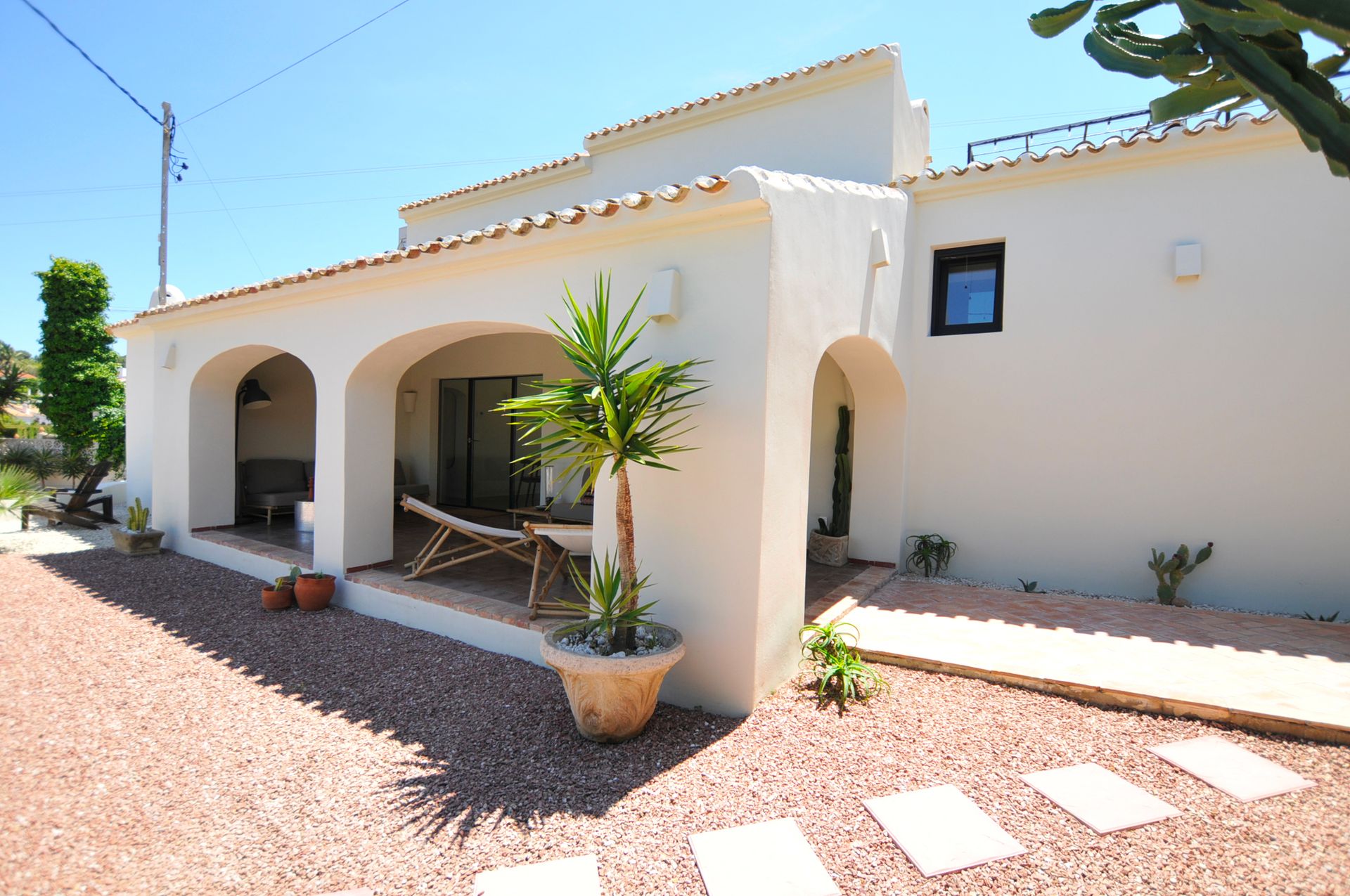
The white façade of Casa Salvia, its arches and Mediterranean garden.
For sale · Cap Martí, Jávea

Casa Salvia, villa for sale in Cap Martí, El Tosalet, Jávea

Your escape in Spain

A renovated Mediterranean villa with 5 bedrooms and a private pool, just minutes from the beaches of Arenal and Granadella.

5comfortable bedrooms
2renovated bathrooms
1private pool, garden and terraces
2airports 1h15 and 1h30 away: Alicante and Valencia
I

The house

A renovated villa, bright and welcoming, designed for time together.

Casa Salvia is an elegant, fully renovated Mediterranean villa on the edge of El Tosalet, in the residential area of Cap Martí, in Jávea. Designed for family and friends, it sleeps up to 10 people in a warm, bright and refined atmosphere.

The villa has 5 comfortable bedrooms and 2 bathrooms, set in generous living spaces that blend Mediterranean character with modern comfort. The large living room, bathed in natural light, invites you to relax with its open volumes and carefully chosen décor.

The kitchen, fully equipped with Siemens appliances, makes it easy to share convivial meals, indoors or outdoors on the property’s various terraces. Year-round comfort comes from Daikin ducted air conditioning, and hot water from an energy-efficient Kosner heat-pump water heater.

Outside, Casa Salvia offers the true Mediterranean way of life: a private pool, sun loungers, lounge areas, a leafy garden and shaded terraces. Private parking takes several cars with complete peace of mind.
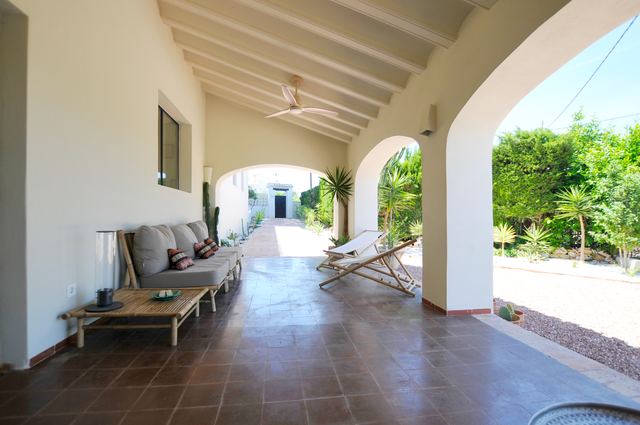
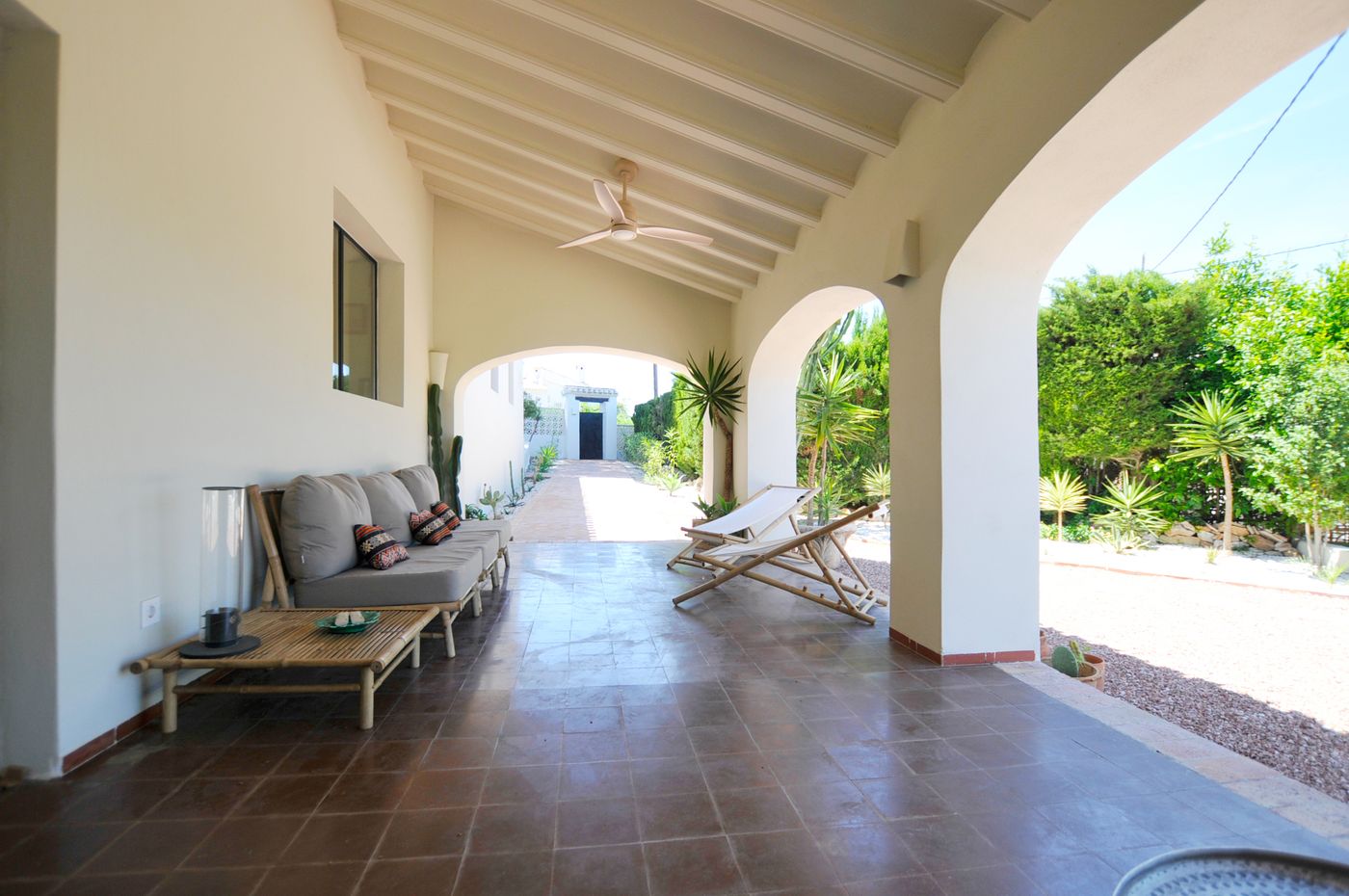
The naya: a covered terrace under a white beamed ceiling, opening onto the garden through wide arches.
The naya, open to the garden
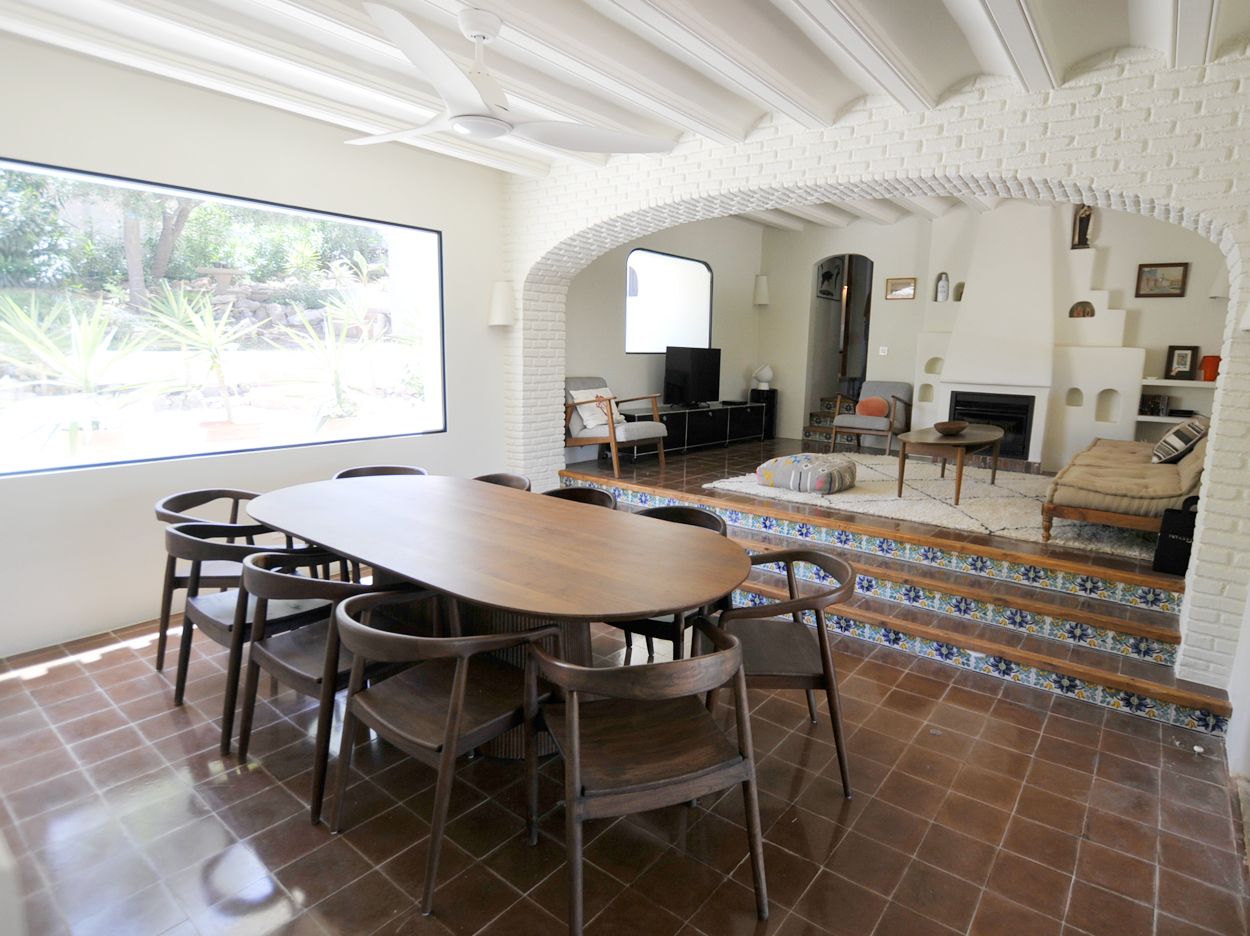
The living area: a large wooden table, and a sitting room with fireplace beneath a whitewashed brick arch, terracotta floors.
The dining and sitting room beneath the arch
Price on requestViewings by appointment
Ask for the price
II

The location

Cap Martí, on the edge of El Tosalet, between Arenal beach and the coves of Cap Prim.

Casa Salvia is in the residential area of Cap Martí, on the edge of El Tosalet, one of the most sought-after parts of Jávea (Xàbia), on the Costa Blanca, between Valencia and Alicante airports.

The area is calm and green, yet only minutes from Jávea’s finest beaches and coves, such as Arenal and Granadella, as well as restaurants, shops, water sports and the historic centre.

Sea, sunshine and the gentle Mediterranean pace of life: an ideal place for a second home or to live all year round.

  • Arenal beacha few minutes by car
  • Granadella covea few minutes by car
  • Alicante airport (ALC)about 100 km · 1h15
  • Valencia airport (VLC)about 115 km · 1h30
Map: Cap Martí, JáveaMontgó · 753 mThe historic centreThe portL’ArenalCap de Sant AntoniCap de la NauGranadellaPortitxolCap PrimCap NegreCasa SalviaCap MartíEl TosaletMediterraneanSeaN↑ Valencia · 115 km↓ Alicante · 100 km
Indicative map, not to scale. Open in Google Maps
III

Investing in Jávea

Holiday lets or long-term rental: two strategies, one villa.

Holiday-rental licence in place

Casa Salvia is declared and listed in the tourism register: holiday letting can continue; the application simply needs to be renewed in the new owner’s name.

Jávea is one of the most sought-after destinations on the Costa Blanca, with a loyal international clientele and a season that stretches well beyond summer. Casa Salvia suits personal use as well as a rental project.

4 584holiday homes at most: the cap set by Xàbia in 2026 keeps supply scarce
5bedrooms sleeping up to 10: the format families and groups of friends look for
300+days of sunshine a year, for a long season

Holiday lets

Short stays, strong demand

Private pool, garden, naya and beaches minutes away: Casa Salvia has everything holidaymakers look for in Jávea, from Easter to autumn.

  • The villa already holds its holiday-rental licence: a rare asset now that Xàbia caps the number of holiday homes.
  • A loyal international clientele: families and groups of friends from all over Europe.
  • Management that is easy to hand over to one of the many local holiday-rental agencies.

Long-term rental

Steady income, simple management

Jávea has a large international resident population looking for quality homes to rent all year or for several months.

  • Families settling in the area, notably for the region’s international schools.
  • Remote workers and European retirees drawn by the climate and quality of life.
  • A mixed approach is possible: mid-term rental in winter, holiday lets in summer.

Casa Salvia’s holiday-rental licence

  1. DoneUrban-planning compatibility granted by Xàbia town hall.
  2. DoneResponsible declaration filed and villa listed in the Valencian tourism register.
  3. To doOn sale: the application simply needs to be renewed in the new owner’s name.

This information is for guidance only and the rules change. Have the licence transfer conditions checked by your notary, a lawyer or a local gestor.

Discuss your project
IV

Jávea’s neighbourhoods

One town, many faces: from the old town to the coves of Cap de la Nau.

The historic centre
Photo : Wikimedia Commons, CC BY-SA

The historic centre

Casco antiguo

Whitewashed lanes, tosca-stone façades and wrought-iron grilles around the fortified church of Sant Bartomeu. The covered market and small shops keep it lively all year round.

The port
Photo : Wikimedia Commons, CC BY-SA

The port

Duanes de la Mar

The fishing harbour and its fish auction, the seafront promenade, the boat-hull-shaped church of Our Lady of Loreto and many seafood restaurants.

Arenal beach

L’Arenal

The sandy beach

Jávea’s large beach of fine sand, gently sloping and ideal for children. Its promenade lined with restaurants, bars and ice-cream parlours is the place to be on summer evenings.

The naya at Casa Salvia

Cap Martí

Home of Casa Salvia

A quiet residential area on the edge of El Tosalet, between Arenal beach and Cap Prim, whose other name, Cap de Sant Martí, echoes that of the area. Mediterranean villas, pine woods and coves just minutes away.

The El Tosalet estate

El Tosalet

The neighbouring estate

A green and secure residential estate above Arenal, on the road to Cap de la Nau. Mediterranean-style villas, leafy gardens and complete tranquillity.

The Montgó
Photo : Joanbanjo, CC BY-SA

The Montgó

Natural park

The massif watching over Jávea, rising to 753 m. Hiking trails, views over the bay and, by the sea, Cap de Sant Antoni with its lighthouse and old windmills.

V

Coves and capes

The finest spots on the coast of Jávea, just minutes from Casa Salvia.

The second Caleta, looking towards Cap Prim
Photo : Wikimedia Commons, CC BY-SA

La Caleta and Cala del Francés

Cala Blanca

At the end of Arenal, two small coves with whitish rocks: Caleta I and Caleta II, sheltered by an arm of tosca stone that keeps its water calm and crystal clear. From there, a path leads to Cala del Francés, at the foot of Cap Prim.

Cap Prim, Portitxol island and Cap Negre
Photo : Joanbanjo, CC BY-SA 3.0

Cap Prim

and Cala Sardinera

Also known as Cap de Sant Martí, it separates Arenal bay from the bay of Portitxol. A short path through the pine wood leads to its viewpoint and to Cala Sardinera, a small, wild pebble cove and an ancient natural anchorage.

Portitxol island
Photo : Joanbanjo, CC BY-SA 3.0

Portitxol

Cala Barraca

Between Cap Prim and Cap Negre, facing Portitxol island, one of the most beautiful coves in the province of Alicante. Its fishermen’s huts gave Cala Barraca its name; its waters are ideal for snorkelling and kayaking.

Cap Negre
Photo : Joanbanjo, CC BY-SA

Cap Negre

The viewpoint

From the Cap Negre viewpoint, near Cap de la Nau, the view takes in almost the whole coast of Jávea: Cap Prim, Cap de Sant Antoni, the Montgó and Portitxol island.

The Cap de la Nau lighthouse
Photo : Joanbanjo, CC BY-SA 3.0

Cap de la Nau

The lighthouse

The easternmost point of the Valencian Community. Its lighthouse stands 120 m above the sea; at its foot lies the Cova dels Òrguens sea cave, and on clear days Ibiza can be seen.

Granadella cove
Photo : Diego Delso, CC BY-SA 4.0

Granadella

Forest park

A small pebble cove about 160 m long, tucked between cliffs at the southern tip of Jávea, in the heart of a protected forest park. Regularly named among the most beautiful beaches in Spain.

In summer, Xàbia town council regulates car access to Portitxol and Granadella: best go early, on foot or by boat.

VI

The story of Jávea

From prehistory to the present day: thirty thousand years by the Mediterranean.

  1. 30,000 years ago

    The oldest traces of human life in Xàbia, in the Cova Foradada cave, date from the Upper Palaeolithic.

  2. 4th – 2nd c. BC

    Iberian culture: the Iberian Treasure of Xàbia, gold and silver jewellery found by chance in 1904 at La Lluca. The originals are in Madrid, with a replica in the town museum.

  3. 6th century

    Visigothic monks found the monastery of Sant Martí, which is thought to have given its name to Cap de Sant Martí, now Cap Prim.

  4. 1244

    The knights of James I of Aragon conquer the area, which becomes part of the new Kingdom of Valencia. Xàbia is born of this conquest.

  5. 1304

    Work begins on the fortress-church of Sant Bartomeu, enlarged in the 15th and 16th centuries to protect the townspeople from Barbary corsairs.

  6. 19th century

    The golden age of the raisin, the “pansa”: shipped from the port to England and North America, it made the town prosperous.

  7. 1896 – 1905

    Joaquín Sorolla discovers Jávea in 1896 and returns to paint in 1898, 1900 and 1905. He describes it as the best place he knows to paint.

  8. 1987

    The Montgó massif, which watches over the town, becomes a natural park.

  9. Today

    An outward-looking town with a very international population, which has preserved its historic centre, its coves and its landscapes.

Jávea and its neighbourhoods, seen from the Montgó.
Jávea and its neighbourhoods, seen from the Montgó.Photo : Wikimedia Commons, CC BY-SA

Few towns on the Costa Blanca tell so much history in so little space: a medieval centre built of tosca stone, a fortified church, windmills on the La Plana plateau and, out in the countryside, the riuraus from the days of the raisin trade.

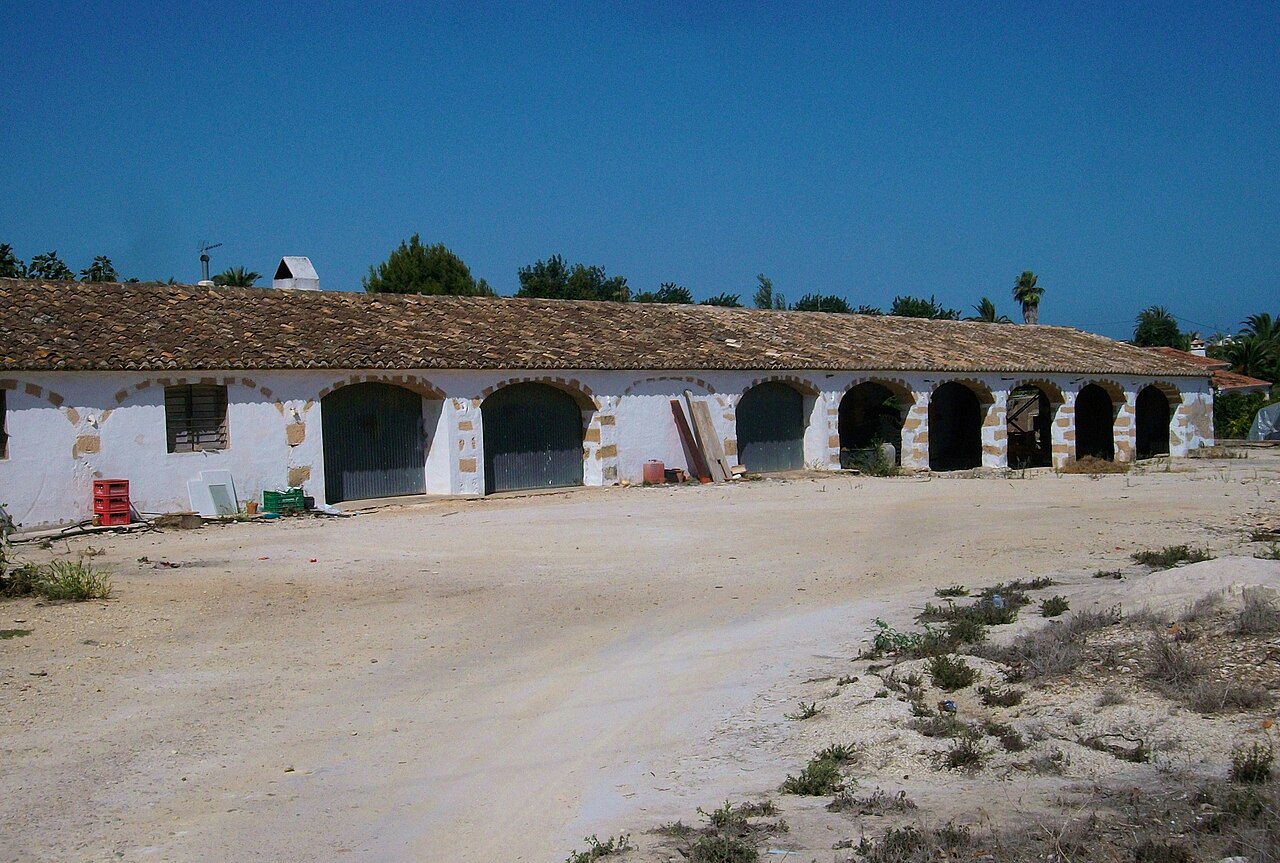
The naya, the large arcaded porch found in so many villas in Jávea, descends from these riuraus where muscat grapes were once dried.

Casa Salvia is very much part of this tradition, with its whitewashed walls, its arches opening onto the garden, its beamed naya and its terracotta floors.

Beneath the arches, summer takes its time.

VII

Getting to Jávea

Between Valencia and Alicante airports, easy to reach by car, bus or train.

From Valencia airport (VLC)

About 115 km

By car · about 1h30

Take the AP-7 south, then the Ondara / Dénia / Jávea exit.

By bus

Get to Valencia bus station, then take a direct bus to Jávea.

By train

Train to Gandía, then a connecting bus to Jávea.

From Alicante airport (ALC)

About 100 km

By car · about 1h15

Take the AP-7 north, then the Benissa / Teulada exit.

By bus

Get to Alicante bus station, then take a direct bus to Jávea.

By train

Train to Dénia, then a taxi or bus to Jávea.

By car from within Spain

Via the AP-7 motorway

From Madrid · about 4h30

Take the A-3 to Valencia, then the AP-7 south to Jávea.

From Barcelona · about 5h30

Take the AP-7 south to Valencia, then continue on the AP-7 to Jávea.

Car hire. To make the most of the beaches, coves, restaurants and villages of the area, hiring a car is recommended. Many rental companies operate at Valencia and Alicante airports.

Private parking. On site, private parking takes several cars with complete peace of mind.
VIII

Gallery

Casa Salvia in pictures. Click a photo to enlarge it.

Contact

Visit Casa Salvia

To find out the price, receive the full brochure or arrange a viewing in Jávea, send your enquiry using this form. The owner will reply to you personally.

Your details are used only to reply to you and are never shared with third parties.

Type the characters shown in the image *
Security code
* required fields