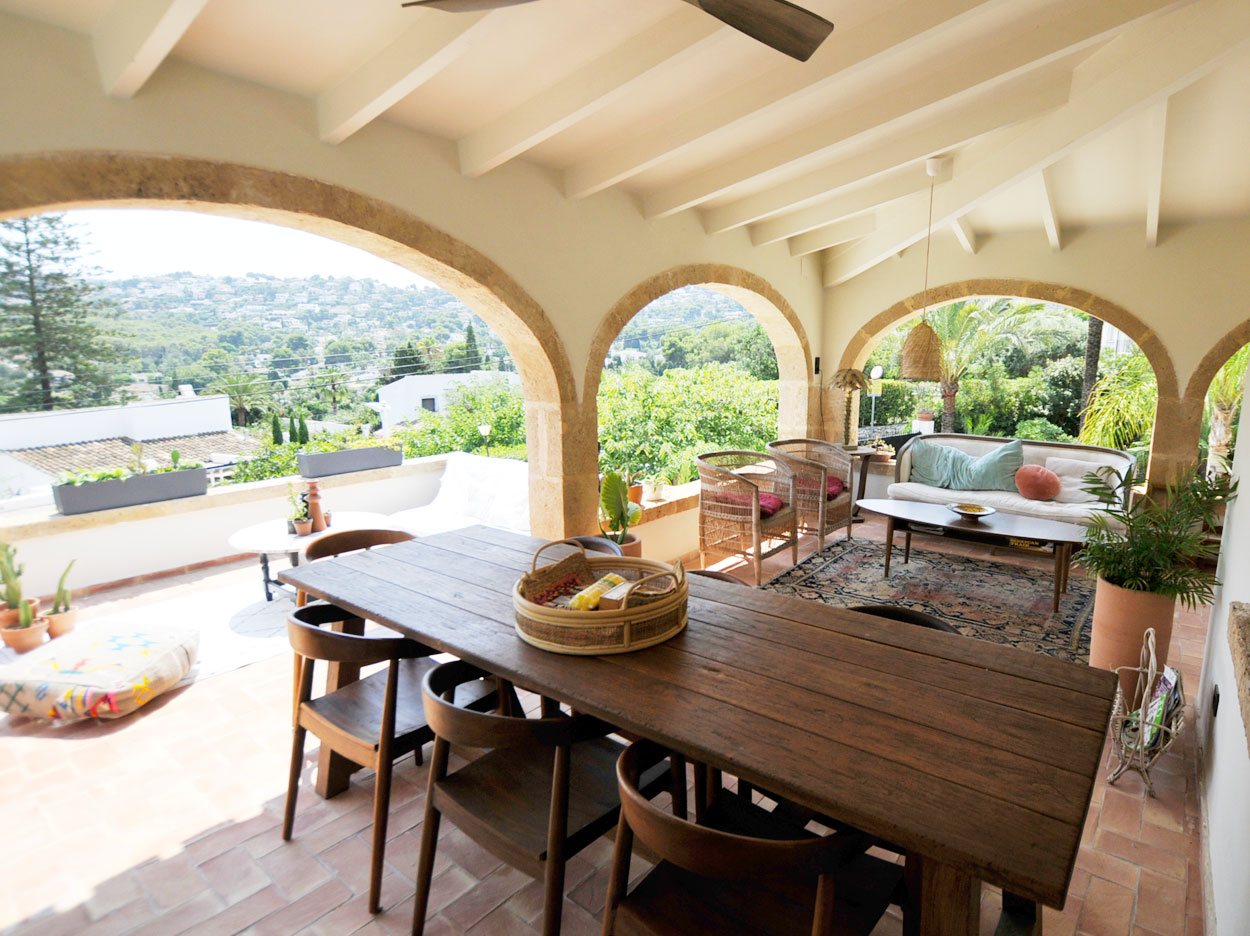
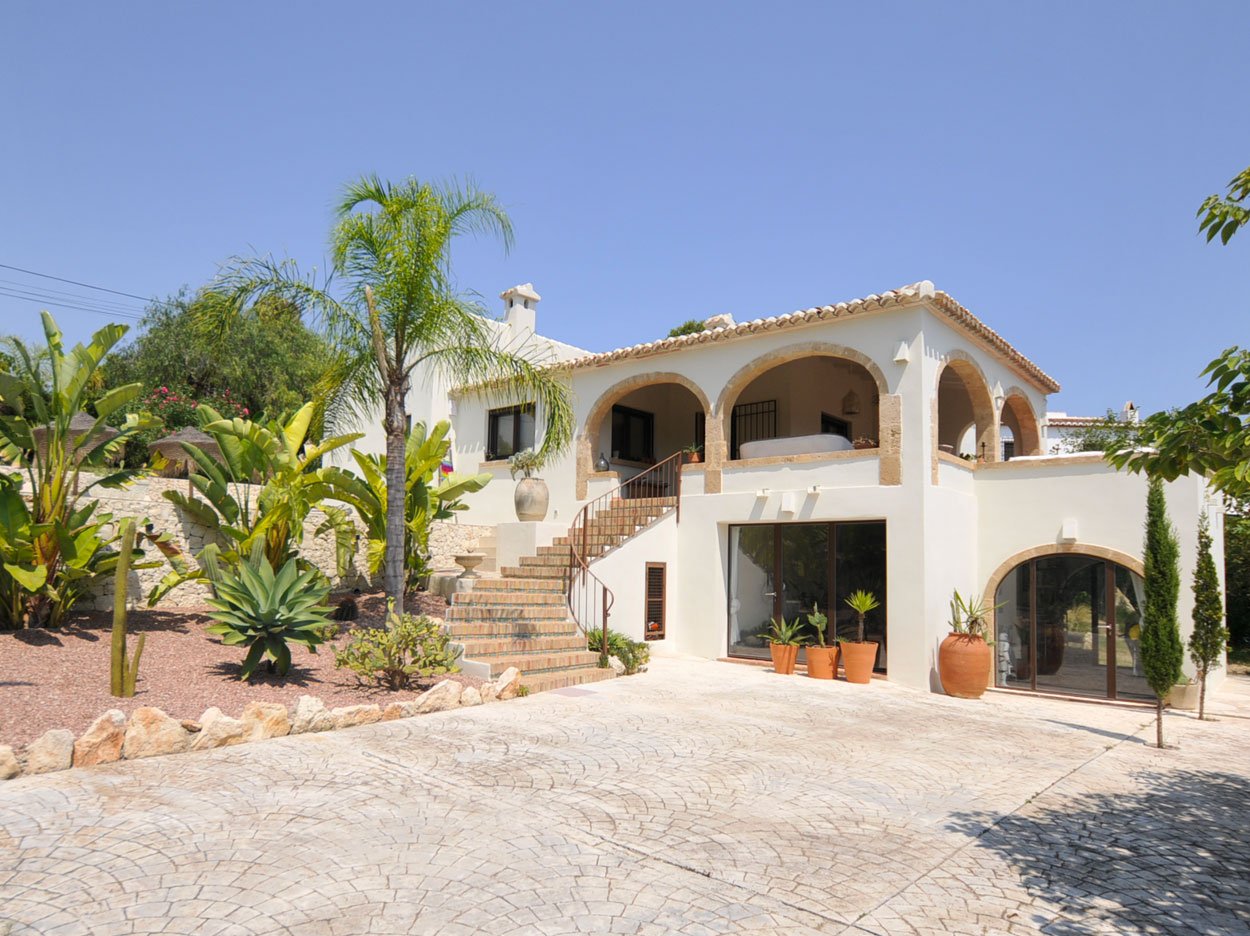
The façade, the outdoor staircase and the Mediterranean garden.
For sale in El Tosalet, Jávea

Casa Murciana, villa for sale in El Tosalet, Jávea

A fully renovated Mediterranean villa in a peaceful setting, minutes from the beaches of the Costa Blanca.

3bedrooms, each with its own bathroom
1private pool and landscaped garden
1966El Tosalet founded, a sought-after area
2airports within 1h30: Valencia and Alicante
I

The house

A villa renovated from top to bottom, designed as a true home.

Casa Murciana is a fully renovated villa, conceived as a true home where elegance, comfort and authenticity come together. From the moment you step inside, you feel a warm atmosphere created by noble materials and beautifully balanced spaces.

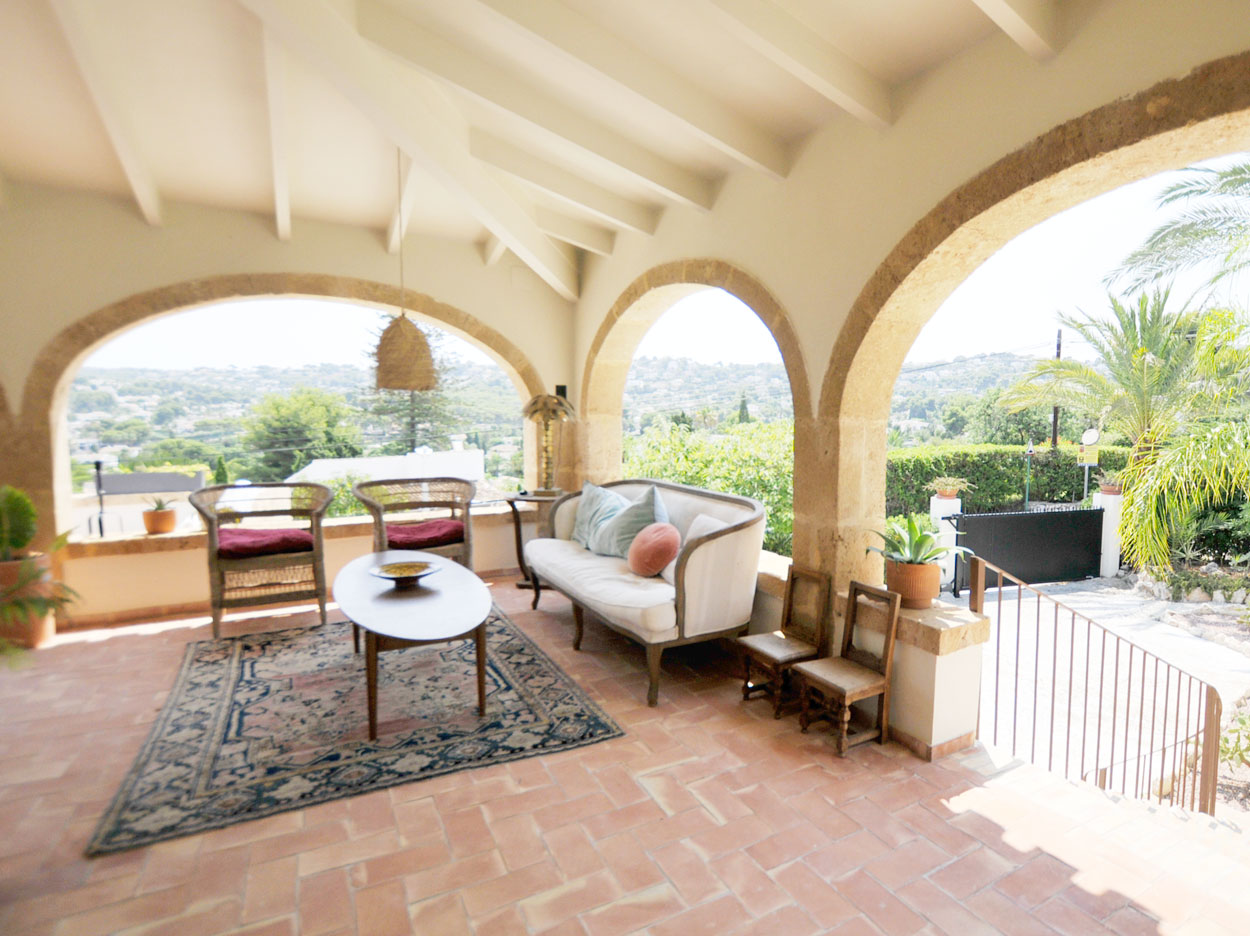
The heart of the house is a bright living area with an open lounge and dining room, extending naturally onto a typically Mediterranean naya, a covered terrace that links indoors and outdoors.

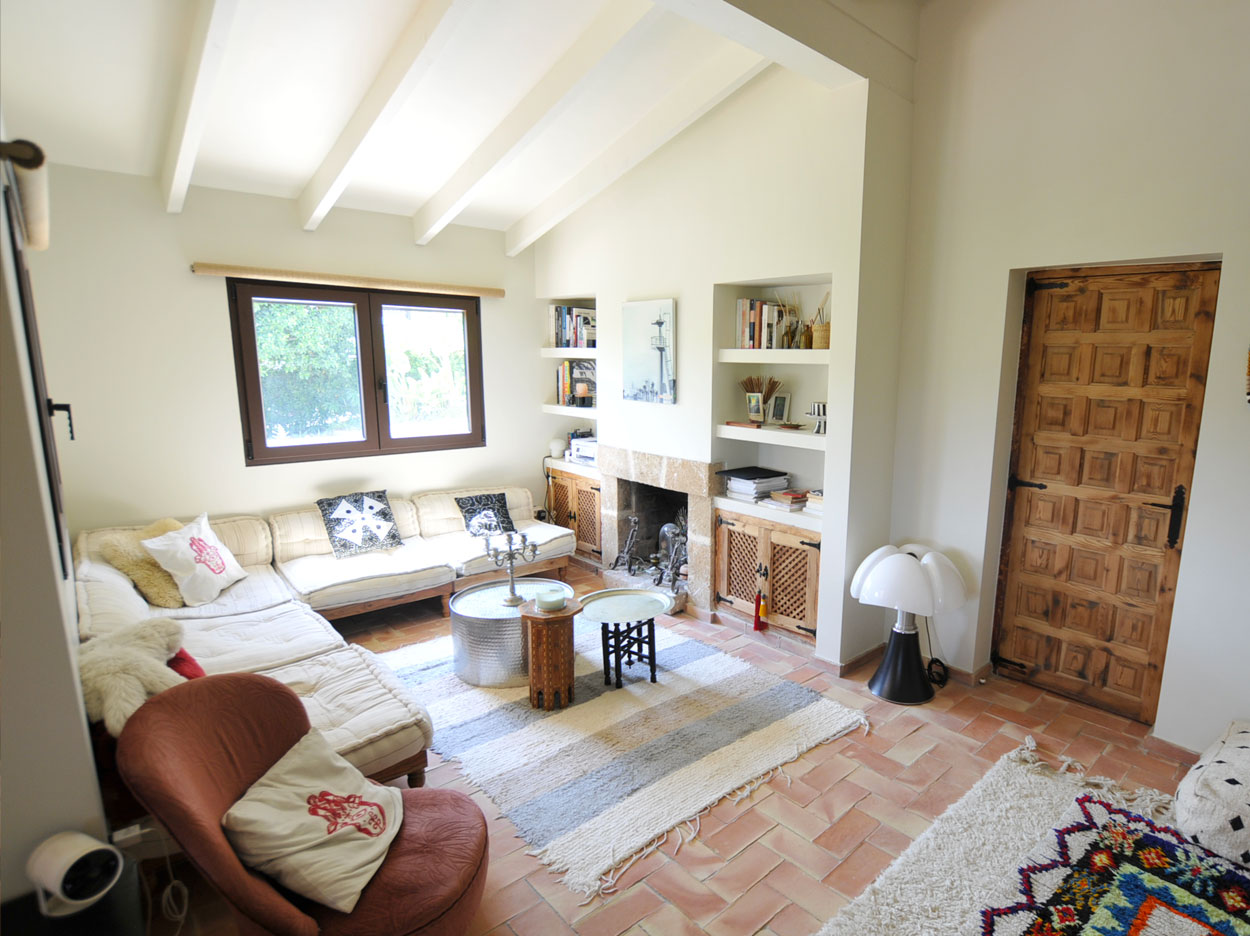
Terracotta floors bring charm and character throughout, while contemporary finishes ensure modern comfort. The fully equipped Siemens kitchen, practical and seamlessly integrated, makes everyday living easy.

The villa offers 3 bedrooms, each with its own bathroom, providing privacy and comfort for everyone. The bathrooms, with wall-hung sanitaryware and concealed taps, have a clean, modern design.

A study, a laundry room and a garage complete the house. Daikin ducted air conditioning keeps the temperature perfect all year round.

The naya, a covered terrace beneath tosca-stone arches.
The naya, open to the hills
The living room: exposed beams, fireplace and terracotta floors.
The living room and its fireplace
Price on requestViewings by appointment
Ask for the price
II

Location

El Tosalet, between Arenal beach and Cap de la Nau.

Casa Murciana is located in El Tosalet, one of the most sought-after residential estates in Jávea (Xàbia), on the Costa Blanca, halfway between Valencia and Alicante.

The area offers a calm, green setting: large plots, pine woods and mature gardens, wide streets and private security. Life here is peaceful, yet Arenal’s sandy beach, its restaurants and all amenities are just a few minutes away by car.

Jávea is known for one of the mildest climates in Spain, its turquoise coves, the Montgó massif and its old town. It is an ideal place for holidays with family or friends, or for living all year round.

  • Arenal beacha few minutes by car
  • Jávea port and old townabout 10 minutes
  • Alicante airport (ALC)about 95 km · 1h20
  • Valencia airport (VLC)about 110 km · 1h30
Map: El Tosalet, JáveaMontgó · 753 mThe historic centreThe portL’ArenalCap de Sant AntoniCap de la NauGranadellaPortitxolCasa MurcianaEl TosaletMediterraneanSeaN↑ Valencia · 110 km↓ Alicante · 95 km
Indicative map, not to scale. Open in Google Maps
III

Investing in Jávea

Holiday lets or long-term rental: two strategies, one villa.

Holiday-rental licence in place

Casa Murciana is declared and listed in the tourism register: holiday letting can continue; the application simply needs to be renewed in the new owner’s name.

Jávea is one of the most sought-after destinations on the Costa Blanca, with a loyal international clientele and a season that stretches well beyond summer. Casa Murciana suits personal use as well as a rental project.

4 584holiday homes at most: the cap set by Xàbia in 2026 keeps supply scarce
3en-suite bedrooms: the format families and groups of friends look for
300+days of sunshine a year, for a long season

Holiday lets

Short stays, strong demand

Private pool, garden, naya, pétanque court and beaches minutes away: Casa Murciana has everything holidaymakers look for in Jávea, from Easter to autumn.

  • The villa already holds its holiday-rental licence: a rare asset now that Xàbia caps the number of holiday homes.
  • A loyal international clientele: families and groups of friends from all over Europe.
  • Management that is easy to hand over to one of the many local holiday-rental agencies.

Long-term rental

Steady income, simple management

Jávea has a large international resident population looking for quality homes to rent all year or for several months.

  • Families settling in the area, notably for the region’s international schools.
  • Remote workers and European retirees drawn by the climate and quality of life.
  • A mixed approach is possible: mid-term rental in winter, holiday lets in summer.

Casa Murciana’s holiday-rental licence

  1. DoneUrban-planning compatibility granted by Xàbia town hall.
  2. DoneResponsible declaration filed and villa listed in the Valencian tourism register.
  3. To doOn sale: the application simply needs to be renewed in the new owner’s name.

This information is for guidance only and the rules change. Have the licence transfer conditions checked by your notary, a lawyer or a local gestor.

Discuss your project
IV

Jávea’s neighbourhoods

One town, many faces: from the old town to the coves of Cap de la Nau.

The historic centre
Photo : Marcosjavea, CC BY-SA 3.0

The historic centre

Casco antiguo

Whitewashed lanes, tosca-stone façades and wrought-iron grilles around the fortified church of Sant Bartomeu. The covered market and small shops keep it lively all year round.

The port
Photo : Wikimedia Commons, CC BY-SA

The port

Duanes de la Mar

The fishing harbour and its fish auction, the seafront promenade, the boat-hull-shaped church of Our Lady of Loreto and many seafood restaurants.

L’Arenal
Photo : Joanbanjo, CC BY-SA

L’Arenal

The sandy beach

Jávea’s large beach of fine sand, gently sloping and ideal for children. Its promenade lined with restaurants, bars and ice-cream parlours is the place to be on summer evenings.

The naya at Casa Murciana

El Tosalet

Home of Casa Murciana

A green and secure residential estate above Arenal, on the road to Cap de la Nau. Mediterranean-style villas, leafy gardens and complete tranquillity.

Cap de la Nau and its coves
Photo : Joanbanjo, CC BY-SA 3.0

Cap de la Nau and its coves

Granadella, Portitxol, Cala Blanca

The wild coast of Jávea: cliffs, turquoise water, Granadella cove and Portitxol island. A paradise for snorkelling, kayaking and boat trips.

The Montgó
Photo : Joanbanjo, CC BY-SA 3.0

The Montgó

Natural park

The massif watching over Jávea, rising to 753 m. Hiking trails, views over the bay and, by the sea, Cap de Sant Antoni with its lighthouse and old windmills.

V

Coves and capes

The finest spots on Jávea’s coast, a few minutes from Casa Murciana.

La Caleta and Cala del Francés
Photo : Wikimedia Commons, CC BY-SA

La Caleta and Cala del Francés

Cala Blanca

At the end of Arenal, two small coves with whitish rocks: Caleta I and Caleta II, sheltered by an arm of tosca stone that keeps its water calm and crystal clear. From there, a path leads to Cala del Francés, at the foot of Cap Prim.

Cap Prim
Photo : Joanbanjo, CC BY-SA 3.0

Cap Prim

and Cala Sardinera

Also called Cap de Sant Martí, it separates Arenal bay from Portitxol bay. A short path through the pine wood leads to its viewpoint and to Cala Sardinera, a small wild pebble cove and former natural anchorage.

Portitxol
Photo : Joanbanjo, CC BY-SA 3.0

Portitxol

Cala Barraca

Between Cap Prim and Cap Negre, facing Portitxol island, one of the most beautiful coves in the province of Alicante. Its fishermen’s huts gave Cala Barraca its name; its waters are ideal for snorkelling and kayaking.

Cap Negre
Photo : Joanbanjo, CC BY-SA

Cap Negre

The viewpoint

From the Cap Negre viewpoint, near Cap de la Nau, the view takes in almost the whole coast of Jávea: Cap Prim, Cap de Sant Antoni, the Montgó and Portitxol island.

Cap de la Nau
Photo : Joanbanjo, CC BY-SA 3.0

Cap de la Nau

The lighthouse

The easternmost point of the Valencian Community. Its lighthouse overlooks the sea from 120 m up; at its foot opens the Cova dels Òrguens, and on clear days you can see Ibiza.

Granadella
Photo : Diego Delso, CC BY-SA 4.0

Granadella

Forest park

A small pebble cove about 160 m long, tucked between cliffs at the southern tip of Jávea, in the heart of a protected forest park. Regularly ranked among the most beautiful beaches in Spain.

In summer, Xàbia town hall restricts car access to Portitxol and Granadella: best to go early, on foot or by boat.

VI

The story of El Tosalet

An estate designed in 1966 as a tribute to Jávea’s architecture.

  1. Before 1966

    A large farming estate of vineyards, carob, orange and pine trees covers the hills above Arenal.

  2. 1966

    El Tosalet is founded on the initiative of the landowner, Julia Jiménez Muro.

  3. 1967

    The estate is inaugurated. Families from Madrid, Valencia, Bilbao and San Sebastián build their summer homes here.

  4. A master plan

    A carefully designed and strictly respected development plan preserves the landscape: most plots enjoy beautiful views.

  5. Mediterranean style

    The houses follow local tradition: white walls, stone arches, clay roof tiles and generous nayas.

  6. Today

    Mature gardens, 24-hour security and an international community: El Tosalet remains one of the most sought-after addresses in Jávea.

A traditional riurau in Xàbia: these arcaded porches were used to dry muscat grapes. The nayas of El Tosalet are their heirs.
A traditional riurau in Xàbia: these arcaded porches were used to dry muscat grapes. The nayas of El Tosalet are their heirs. Photo : Wikimedia Commons, CC BY-SA

From the outset, El Tosalet established itself as one of Jávea’s most prestigious residential areas, admired for its gardens, its landscape and its proximity to Arenal beach.

Its villas pay tribute to the region’s traditional architecture. The naya, the large arcaded porch, descends from the riuraus: stone and brick structures where muscat grapes were once dried into raisins, one of the great sources of wealth of the Marina Alta.

Casa Murciana is very much part of this tradition, with its tosca-stone arches, its naya open to the hills and its terracotta floors.

A house in the spirit of the riurau, renovated for life today.

VII

Getting to Jávea

From Valencia and Alicante airports, or by car from elsewhere in Spain.

From Valencia airport (VLC)

About 110 km

By car · about 1h30

Take the AP-7 south, then exit 62 (Ondara / Dénia / Jávea). Then follow signs to Jávea via the N-332 and the CV-734.

By bus · about 2h30

Metro (line 3 or 5) to Valencia bus station, then a direct bus to Jávea.

By train

Metro (line 3 or 5) to Valencia-Nord (Estación del Norte), train to Gandía (about 1h), then a direct bus to Jávea (about 1h15).

From Alicante airport (ALC)

About 95 km

By car · about 1h20

Take the AP-7 north, exit 63 (Benissa / Teulada), then follow signs to Jávea via the CV-740.

By bus · about 2h15

Bus from the airport to Alicante bus station, then a direct bus to Jávea.

By train

Bus or taxi to Alicante-Terminal station, train to Dénia (via Benidorm if needed), then bus or taxi to Jávea (about 1h30).

By car from elsewhere in Spain

Via the A-3 and AP-7

From Madrid · about 4h30

Take the A-3 to Valencia, then the AP-7 south to Jávea.

From Barcelona · about 5h30

Take the AP-7 south to Valencia, then continue on the AP-7 to Jávea.

Car hire. For more freedom during your stay, consider hiring a car: many rental companies operate at Valencia and Alicante airports and in the larger towns.

Driving tips. Spanish motorways are well maintained and clearly signposted. Use a GPS or navigation app to follow your route in real time and avoid traffic jams.

VIII

Gallery

Casa Murciana in pictures. Click a photo to enlarge it.

Contact

Visit Casa Murciana

To find out the price, receive the full brochure or arrange a viewing in Jávea, send your enquiry using this form. The owner will reply to you personally.

Your details are used only to reply to you and are never shared with third parties.

Type the characters shown in the image *
Security code
* required fields